
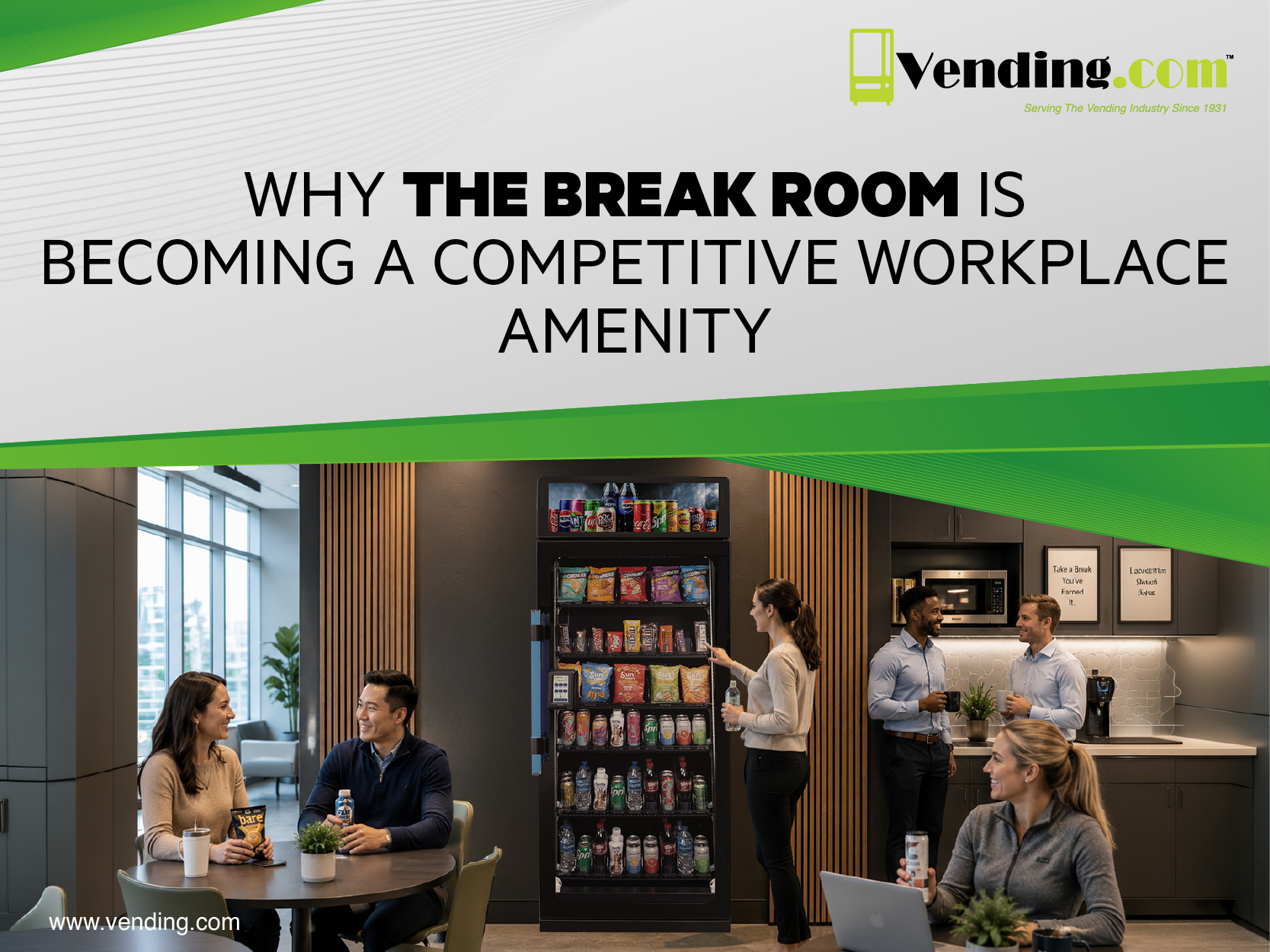
The workplace experience extends beyond desks, meeting rooms, and technology. Employees also notice the everyday conveniences that make their workday easier. The break room is one of those spaces.
A basic room with a refrigerator and a few snacks may no longer meet expectations. Employees increasingly look for convenient access to food and beverages, more variety, fresh options, and a comfortable place to step away during the workday.
This is where the break room as a workplace amenity becomes important. A well-managed break room can provide more than refreshments. It can contribute to a more convenient and engaging workplace experience.
For employers, a full-service break room refreshment program can take this a step further by managing product selection, replenishment, equipment, and ongoing service, rather than leaving the entire program to internal teams.
Why Are Break Rooms Becoming More Important to Employees?
Break rooms may be one of the few workplace spaces employees use every day, making them an important part of the overall workplace experience.
Several factors are changing expectations around these spaces:
- Convenience: Employees appreciate having food and beverages available without leaving the workplace.
- Variety: Different employees have different preferences, dietary needs, and eating habits.
- Comfort: A dedicated space gives employees somewhere to step away from their workstations.
- Connection: Shared break areas can create opportunities for informal interaction.
- Workplace experience: Small, practical amenities can influence how employees experience their time at work.
- Accessibility: Employees working multiple shifts, extended hours, or nontraditional schedules often value reliable access to food and beverages throughout the day.
This doesn’t mean every break room needs to become a full cafeteria. The goal is to provide useful amenities that reflect how employees actually use the workplace.
What Makes a Break Room a Competitive Workplace Amenity?
So, what makes a good office break room? It’s not necessarily the number of machines or products available. A competitive break room combines convenience, choice, reliability, and an environment employees want to use.
Convenient Food and Beverage Access
Employees can quickly grab a snack, beverage, or meal without leaving the workplace.
Variety That Reflects Employee Preferences
A useful program can include traditional snacks and beverages alongside healthier, fresh, or specialty options.
Easy Purchasing
Cashless payments and self-service options make purchases faster and more convenient.
Reliable Availability
Products need to be available when employees want them. Regular replenishment and responsive service are therefore essential.
A Comfortable Shared Space
Seating and a clean, inviting environment can make the break room more useful for recharging or connecting.
The value comes from how these elements work together, not from any single amenity. The most effective workplace break room amenities support convenience, variety, and accessibility while fitting the needs of the specific workforce.
How Full-Service Refreshment Can Transform the Break Room
A full-service break room program goes beyond installing a vending machine and restocking it periodically. A full-service approach can manage much of the ongoing work involved in operating a workplace refreshment program, including:
- Food and beverage selection
- Equipment and merchandising
- Product replenishment
- Inventory management
- Equipment maintenance
- Cashless payment options
- Product mix adjustments
- Program monitoring and service
For employers, this can reduce day-to-day work for internal facilities or administrative teams.
For employees, the benefit is a more consistent experience: the products they want are easier to find, equipment is maintained, and the refreshment program can evolve based on actual demand.
What Employees Expect from a Modern Break Room
A modern break room can provide more than traditional chips, candy, and soft drinks.
Employees may value:
- Convenient food and beverage access
- Fresh meals and snacks
- Healthier choices
- Variety for different preferences
- Cashless purchasing
- Grab-and-go options
- Availability throughout the workday
- A comfortable place to take a break
The goal isn’t to offer everything. It’s to offer a practical selection that reflects the workforce.
For example, an office with employees who frequently work through lunch may benefit from fresh grab-and-go meals. A manufacturing facility with multiple shifts may prioritize reliable access to beverages and snacks throughout the day.
The equipment can also be matched to the workplace. For example, a compact combo machine such as Vending.com’s Wittern 29-Selection Express Combo Vending Machine can combine snack and beverage access in a smaller footprint, while an AI smart cooler such as the Wittern Spectra Pro AI Smart Cooler can support a more open, grab-and-go retail experience.
How a Better Break Room Can Support Employee Experience
A well-managed break room can make everyday workplace routines more convenient.
It can:
- Give employees an accessible place to take a break.
- Reduce the need to leave the workplace for refreshments.
- Provide convenient alternatives during busy workdays.
- Create opportunities for informal employee interaction.
- Give employees more choice in what and when they purchase.
This is why employee break room satisfaction should be considered alongside other workplace experience initiatives.
A refreshment program should not be presented as a guaranteed solution for retention or productivity. Instead, employers can evaluate whether employees are using the program, what they purchase, and what they say about the experience.
From Basic Vending to Full-Service Workplace Refreshment
Workplace refreshment has expanded beyond the traditional vending machine.
| Traditional Approach | Full-Service Approach |
| Basic snack and beverage vending | Broader food and beverage program |
| Limited product selection | Assortment based on workplace demand |
| Periodic restocking | Ongoing replenishment management |
| Equipment-focused service | Equipment, inventory, and program management |
| Basic purchasing | Cashless and self-service options |
| Packaged snacks | Snacks, beverages, fresh food, and grab-and-go options |
This doesn’t mean traditional vending has become obsolete. Vending can still be an effective part of a workplace refreshment program.
The difference is that a full-service approach treats the break room as an ongoing workplace program, rather than simply a collection of machines. Vending.com takes this broader approach by offering workplace refreshment solutions that can bring together vending machines, micro markets, fresh food, beverages, and service based on the needs of each location.
How Employers Can Build a Better Break Room Experience
Creating a better break room starts with understanding what employees actually want.
Understand Employee Preferences
Review employee feedback, purchasing patterns, and popular products. Consider different meal occasions, dietary preferences, and workplace schedules.
Offer the Right Product Mix
Depending on the workplace, this could include:
- Snacks
- Beverages
- Fresh food
- Healthier choices
- Grab-and-go meals
- Premium or specialty products
The goal is to create a useful assortment rather than fill the space with products that don’t sell. For example, a smaller workplace may prioritize a combination vending machine, while a larger facility may need higher-capacity beverage equipment or an expanded self-service format. Vending.com offers options ranging from compact combo machines to larger cold-drink machines and AI smart coolers.
Make Purchasing Convenient
Cashless payments, self-service options, and easy-to-navigate displays can speed up the purchasing process.
Keep the Program Reliable
Regular replenishment, equipment maintenance, and responsive service are critical. An attractive break room loses value when products are consistently unavailable or equipment isn’t working.
Use Data to Improve the Program
Sales and inventory information can show which products perform well and where employee preferences are changing. Operators can use these insights to adjust the assortment over time.
Review Space Constraints
Available space often influences whether a workplace uses vending machines, micro markets, coffee service, AI smart coolers, or a combination of solutions.
What Does a Full-Service Break Room Program Include?
So, what is a full-service break room program? The exact offering varies by workplace, but it can include a combination of:
- Vending machines
- Micro markets
- Refrigerated solutions
- Fresh food programs
- Coffee and beverage service
- Product merchandising
- Inventory management
- Equipment maintenance
- Restocking
- Cashless payment technology
- Program monitoring and reporting
A workplace doesn’t necessarily need every option. The right combination depends on employee population, available space, location, purchasing patterns, and refreshment needs.
A full-service provider can also manage the ongoing coordination required to keep these components operating together. Vending.com can help workplaces evaluate these factors and develop a refreshment program around their specific requirements.
Is Investing in the Break Room Worth It?
Evaluate the value of a break room program based on the needs and usage of the specific workplace.
Employers can look at:
- Employee usage
- Purchase frequency
- Product demand
- Employee feedback
- Program operating costs
- Service reliability
- Workplace attendance patterns
- Overall employee experience
This approach is more useful than assuming that a particular amenity will automatically improve retention or productivity.
For example, the question “Do break room amenities improve employee retention?” cannot be answered with a universal guarantee. Retention depends on many factors, including compensation, management, career opportunities, culture, flexibility, and the overall employee experience.
A well-designed break room can be one supporting element within that broader experience.
How to Build a Break Room That Employees Actually Use
Adding a vending machine alone does not guarantee employees will use the break room.
A more effective approach is to build the program around actual employee behavior.
Start With Employee Needs
Find out what employees want and when they use the break room.
Match the Program to the Workplace
A small office may need a focused vending program, while a larger facility may benefit from a micro market, fresh food, or multiple refreshment options. For workplaces with limited space, a combo vending machine can provide both snacks and beverages in one unit. Where employers want a more open grab-and-go experience, an AI smart cooler can provide another option.
Prioritize Availability
Keep popular products stocked and equipment operational.
Keep the Environment Inviting
Cleanliness, seating, lighting, and layout can influence whether employees want to use the space.
Review and Adapt
Employee preferences change. Review sales data and feedback regularly and adjust the program accordingly.
For HR and facilities teams, this can serve as a practical break room upgrade checklist: understand employee needs, choose the right refreshment options, make purchasing convenient, maintain availability, and continually improve the program.
Key Takeaways
The break room as a workplace amenity is becoming more relevant as employers look for practical ways to improve the everyday workplace experience.
- Employees may expect more than basic snacks and beverages.
- A modern break room can combine convenience, variety, fresh food, technology, and a comfortable environment.
- Full-service refreshment programs can manage product selection, replenishment, equipment, and ongoing service.
- The right solution depends on employee preferences, available space, workplace size, and operational needs.
- Vending machines, micro markets, fresh food, and other options can be combined to create a refreshment program suited to the workplace.
A break room doesn’t need to become elaborate to be valuable. It needs to be useful, reliable, and designed around the people who use it.
Ready to Upgrade Your Workplace Break Room?
A full-service refreshment program can take the day-to-day management of workplace food and beverage services off your team’s plate while giving employees more convenient choices.
Explore Vending.com’s full-service workplace refreshment program and solutions to find the right combination of vending, micro markets, fresh food, beverages, and service for your workplace.
Frequently Asked Questions
Why are break rooms important to employees?
Break rooms give employees a dedicated place to step away from work, access food and beverages, recharge, and interact informally with coworkers. The space’s quality and convenience can shape the overall workplace experience.
What should a modern workplace break room include?
A modern break room can include convenient food and beverage access, snacks, fresh or healthier options, cashless purchasing, self-service retail, comfortable seating, and reliable replenishment.
What is full-service workplace refreshment?
Full-service workplace refreshment is a managed program that can cover food and beverage selection, equipment, merchandising, replenishment, inventory, maintenance, payment technology, and ongoing program management.
What does a full-service refreshment provider do?
A full-service provider can manage the ongoing operation of a workplace refreshment program, including product selection, stocking, equipment maintenance, inventory management, and service.
How much does a full-service break room cost?
Costs vary based on factors such as workplace size, equipment, product assortment, service requirements, and the type of refreshment program. A provider can typically recommend an approach based on the specific workplace.
Who manages a workplace break room?
Management can vary. Some employers manage refreshment programs internally, while others work with a full-service break room provider to handle product selection, replenishment, equipment, and ongoing service.
What food and beverages should a workplace break room offer?
The right assortment depends on employee preferences and workplace needs. Common options include snacks, beverages, fresh food, healthier choices, grab-and-go meals, and specialty products.
How can employers make their break room more appealing?
Employers can improve the break room by offering products employees want, providing convenient cashless purchasing, maintaining reliable inventory, keeping the space clean and comfortable, and using employee feedback and sales data to refine the program.
How can vending machines support a workplace break room?
Vending machines provide convenient access to snacks and beverages while requiring relatively little space. They can serve as a standalone solution or complement other refreshment options. Vending.com offers a range of workplace vending solutions that can be incorporated into broader break room programs.
Can a micro market be part of a workplace break room?
Yes. A micro market can turn part of a workplace break room into an open, self-service retail area with a broader selection of snacks, beverages, fresh food, and grab-and-go products.
Do break room amenities improve employee retention?
Break room amenities may contribute to employee satisfaction and convenience, but retention is influenced by many factors, including compensation, leadership, workplace culture, benefits, and career development opportunities.
What are the best break room amenities for employees?
The best break room amenities depend on workforce preferences but often include snacks, beverages, fresh food, cashless purchasing, comfortable seating, coffee service, and convenient self-service retail options.