
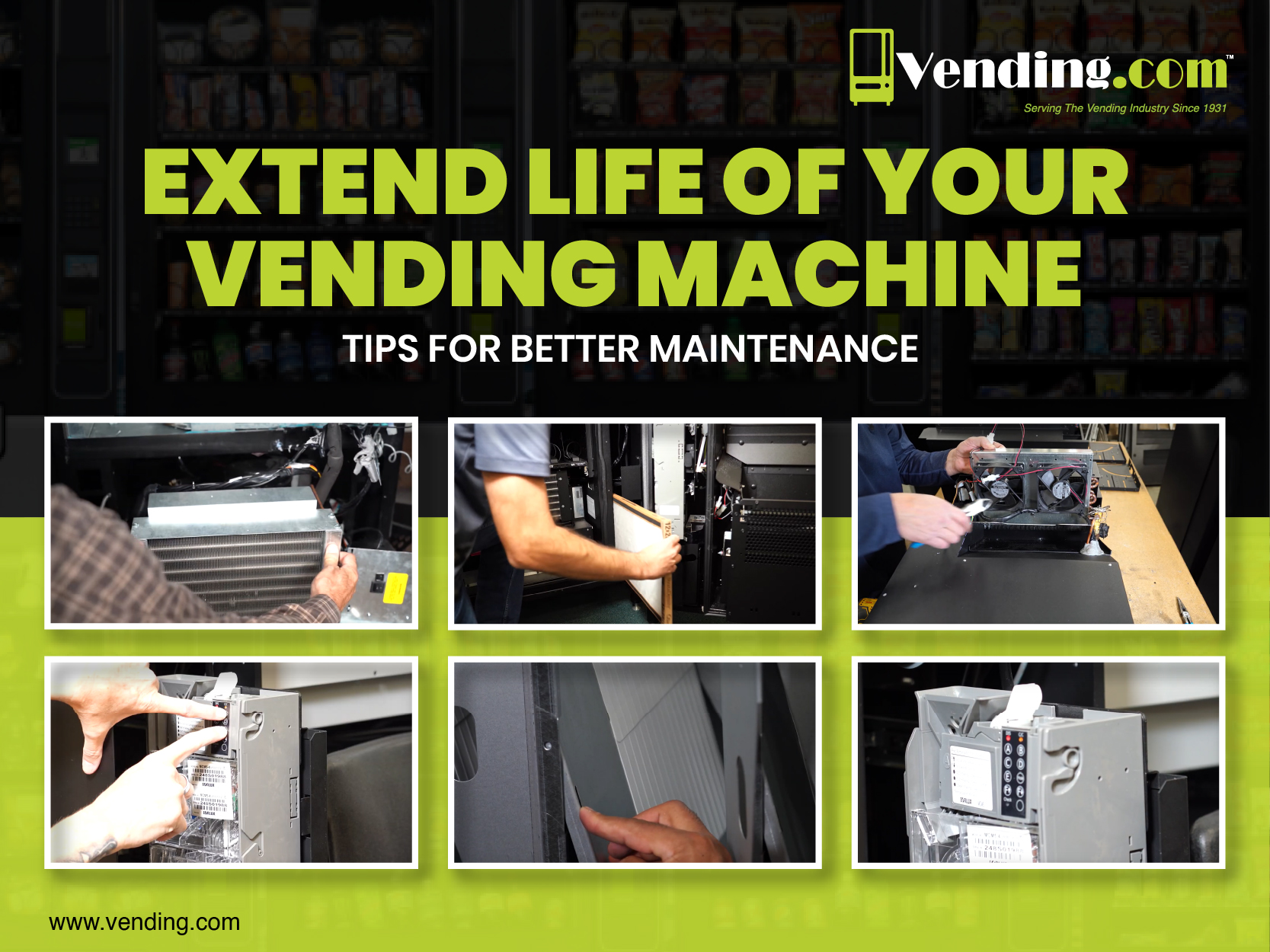
In the United States, more than 4.5 million vending machines generate over $30 billion in annual sales. (Source: GrandViewResearch) At the same time, industry service data indicate that inadequate vending machine maintenance can reduce a machine’s profitable life by 30-40%.
This blog covers:
- Vending Machine Maintenance & Profitability
- Tips That Prevent Failures | Weekly Recommendations
- Result-oriented Preventive Maintenance Schedules
- Conclusion: Maintenance Is the Key to Long-Term ROI
- Ready to Protect Your Vending Investment?
Why Vending Machine Maintenance Directly Impacts Profitability
Many new operators think of maintenance as an expense, but it’s actually one of the most reliable ways to protect profit. Consistent vending machine maintenance helps prevent revenue‑killing downtime, reduce emergency service calls by up to 50%, and protect high‑value components like compressors and control boards. It also improves customer trust and repeat usage by keeping machines clean, stocked, and reliable. And because reactive repairs cost an estimated 3–5 times more than preventive care, routine upkeep becomes one of the smartest ways to extend equipment life and keep machines earning for 10–15 years.
Tips That Prevent Failures | Weekly Recommendations
Most vending machine problems start small. Ignoring them turns minor issues into major repairs.
| Frequency | Check / Action | Purpose |
|---|---|---|
| Check During Refill | Inspect coin mechanisms and bill validators for dust or jams | Ensure smooth payment processing |
| Check During Refill | Ensure products are properly aligned and spirals are not strained | Prevent product jams and motor strain |
| Check During Refill | Check displays and screens for error codes | Early detection of faults |
| Check During Refill | Wipe customer touchpoints | Maintain hygiene and customer confidence |
| Weekly | Clean delivery bins and keypads | Prevent dirt buildup and improve hygiene |
| Weekly | Inspect door seals for air leaks | Maintain cooling efficiency |
| Weekly | Verify refrigeration temperature consistency | Avoid product spoilage and compressor damage |
Getting to know your Vending Machine Parts & Service Requirements
Understanding your vending machine’s core systems will help you spot trouble early and fix issues as they arise.
Critical components to monitor:
- Motors and spirals
- Refrigeration systems
- Control boards
- Coin mechs and cashless readers
- Door switches and sensors
Using certified vending machine parts and service is essential. Established suppliers such as Vending.com provide access to compatible machines, parts guidance, and long-term service support, critical for U.S. operators managing multiple locations.
Result-oriented Preventive Maintenance Schedules
Successful vending operators follow a schedule, not just guesswork.
| Check / Action | Frequency |
|---|---|
| Inspect wiring and connectors | Quarterly |
| Test vend motors and delivery sensors | Quarterly |
| Check for software or firmware updates | Quarterly |
| Deep clean refrigeration systems | Bi-Annual |
| Inspect insulation and door gaskets | Bi-Annual |
| Replace worn belts or seals | Bi-Annual |
| Full diagnostic inspection | Annual |
| Firmware updates and calibration | Annual |
| Review machine placement and airflow | Annual |
This structured approach reduces surprise breakdowns and helps extend life well beyond industry averages.
The most expensive breakdowns are the ones customers see.
Ensure these don’t happen | Early Warning Signs
- Products hanging or double dropping
- Inconsistent cooling
- Rejected bills or failed card transactions
- Unusual vibrations or grinding sounds
Vending.com’s modern vending machines include built‑in diagnostic tools that operators can easily access. Running these diagnostics regularly helps identify issues early, allowing operators to fix vending machine problems before they affect reliability, customer experience, or revenue.
Location and Environment: A Major Factor in Machine Longevity
Even the best-maintained machine can fail early if placed incorrectly.
Environmental risks include:
- Direct sunlight exposure
- Poor ventilation
- High humidity
- Dust-heavy industrial areas
For semi-outdoor locations, use weather-rated machines. Established providers like Vending.com can help with selecting specific U.S. environments.
Operator Training: The Hidden Maintenance Advantage
A well‑informed operator is one of the best tools for maintaining vending equipment. Completing basic training ensures operators understand the essential practices that support reliable, consistent machine performance.
Effective training often includes:
- Proper product loading techniques
- Safe, routine cleaning methods
- Recognizing early signs of potential issues
- Understanding when professional service is the best next step
Even a minimal investment in training can significantly reduce avoidable issues and support long‑term machine performance.
Conclusion: Maintenance Is the Key to Long-Term ROI
A vending machine is one of the few businesses that can operate 24/7 without staff, but only when supported by disciplined vending machine maintenance.
By following:
Proven vending machine care tips, reliable machine parts & service, and acting early, operators can extend life by years.
Trusted industry platforms like Vending.com don’t just supply machines; they support operators with the knowledge, equipment, and service standards required to run a profitable vending business in the U.S. market.
Ready to Protect Your Vending Investment?
If you’re looking for vending machines that are easy to operate, simple to maintain, and built for long‑term reliability, Vending.com is here to help. Our team provides dependable equipment, expert guidance, and ongoing support to keep your operations running smoothly.
Call us at 855-929-1042 to speak with a specialist and find the right vending solutions for your business.
Estimate your route potential: use the vending machine profit calculator to model revenue, expenses and ROI before choosing a machine.