
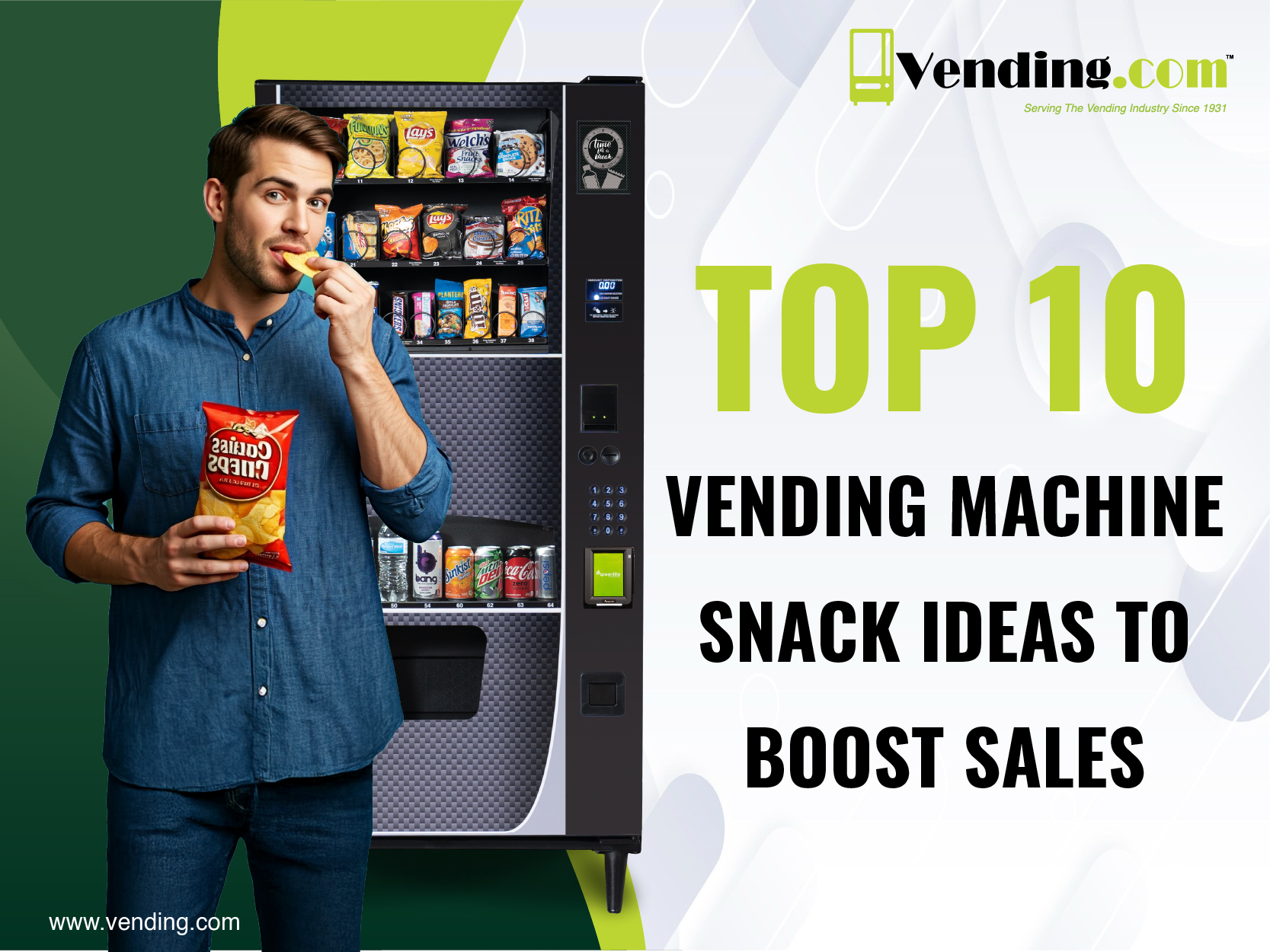
Top 10 Vending Machine Snack Ideas to Boost Sales
Discover the best foods for vending machines, from top-selling traditional favorites to healthy alternatives, and learn how to stock smarter for maximum profitability.
Key Takeaways
- The most successful vending machine snacks combine strong brand recognition, long shelf life, and high impulse-buy appeal.
- Traditional favorites like chips, candy bars, cookies, and savory snacks continue to drive the highest and most consistent vending sales.
- Healthy vending snacks such as protein bars, nuts, jerky, and air-popped popcorn are rapidly growing in demand, especially in offices, gyms, and healthcare facilities.
- Matching snack selections to the specific location and audience demographics is essential for maximizing vending machine profitability.
- A balanced snack mix, strategic pricing, and consistent inventory management help vending operators increase customer satisfaction and boost long-term revenue.
Vending machines have become an indispensable part of our fast-paced lives, offering a convenient and efficient way to grab a quick bite or a refreshing drink on the go. But not all snacks perform equally behind that glass panel.
Understanding which foods are the best for vending machines, including the top-selling, most popular snacks aligned with current trends, is the difference between a machine that barely breaks even and one that consistently drives profit.
This guide dives into the top 10 vending machine snack ideas that cater to consumer preferences, reflects the latest market trends, and gives operators actionable strategies for stocking smarter. Whether you’re launching your first vending machine or optimizing an existing route, let’s explore the snack ideas that can transform your machine’s profitability.
What Makes a Snack Successful in a Vending Machine?
Not every snack is built for the vending environment. Before adding a new item to your selection, experienced operators evaluate snacks against a consistent set of criteria. Understanding these factors will help you make smarter buying decisions and avoid costly dead stock.
Brand Recognition
Consumers make split-second decisions at vending machines, often within seconds of approaching the glass. A recognizable brand such as Snickers, Doritos, or RXBAR immediately signals familiarity and triggers a purchase. Generic or unknown brands face a significant uphill battle, no matter how good the product actually is. Sticking with nationally recognized names, especially for new locations, reduces risk and drives consistent sales volume.
Shelf Life and Storage
Vending machines are not restocked daily. The best snacks for vending machines have a shelf life of several weeks to months, ensuring your inventory stays fresh between service visits. Items like chips, candy bars, and protein bars typically excel here. Avoid anything that requires refrigeration in a standard ambient machine, as spoilage creates waste, health concerns, and damage to your brand reputation.
Profit Margins
A snack’s wholesale cost versus its retail price in the vending machine determines your margin per sale. High-volume, low-cost items like candy bars and chips often provide excellent margins. Meanwhile, premium healthy snacks carry higher wholesale costs but can be priced at a premium in the right locations (gyms, corporate offices) where consumers are willing to pay more. Always calculate your cost-per-unit before adding an item.
Location and Audience Fit
A protein bar that flies off the shelf at a gym might sit untouched in a manufacturing break room. The best-performing vending snacks are those matched to the specific needs, demographics, and preferences of the people using that particular machine. An office full of health-conscious professionals will respond very differently than a school cafeteria full of teenagers.
Impulse-Buy Appeal
Vending machines thrive on impulse purchases. Snacks with bright packaging, recognizable branding, and a satisfying flavor profile are inherently more likely to trigger an unplanned buy. Items priced at accessible price points (typically under $2.50) remove the mental friction that stops customers from completing a purchase.
Top-Selling and Most Popular Vending Machine Snacks
When it comes to consistent, high-volume performance, traditional snacks remain the best-performing category across virtually every vending location. These are the tried-and-true items that consumers have grown up with, reach for automatically, and will continue to buy regardless of trends. Here is a breakdown of the top-selling and best-performing vending snacks by category:
Chips and Pretzels
Salty snacks dominate vending machines for a reason: they are universally loved, incredibly shelf-stable, and come in portion-controlled packaging that fits perfectly in most machine slots. The most popular brands include Lay’s Classic, Doritos Nacho Cheese, Cheetos Crunchy, Ruffles, and Sun Chips. These items are impulse-buy staples that generate consistent sales in virtually every environment, from schools to office buildings to industrial facilities.
Chocolate and Candy
Chocolate and candy represent some of the most powerful impulse purchases in vending. Snickers, M&M’s, Reese’s Peanut Butter Cups, KitKat, and Skittles are perennial best-sellers that appeal to a wide demographic range. Their small size, strong brand equity, and satisfying taste make them near-universal hits. A machine without at least two or three chocolate options is leaving significant revenue on the table.
Cookies and Pastries
Comfort snacks like Oreos, Chips Ahoy, Pop-Tarts, and Little Debbie products perform especially well in environments where people are hungry and looking for something substantive. These items have excellent shelf lives, are highly recognizable, and offer a more meal-adjacent experience than pure candy.
Savory Snacks
Beyond chips, savory snacks such as Slim Jim meat sticks, Cheez-It crackers, and microwave popcorn add variety and cater to customers looking for something more filling. These products have strong appeal in high-energy environments like manufacturing plants and truck stops where workers need hearty, satisfying fuel to get through a long shift.
Here is a quick reference for the top-selling snack categories and why they consistently perform well:
| Category | Top Brands / Products | Why They Sell |
| Chips & Pretzels | Lay’s, Doritos, Cheetos, Ruffles, Sun Chips | Universal appeal, brand loyalty, satisfying crunch |
| Chocolate & Candy | Snickers, M&M’s, Reese’s, KitKat, Skittles | Impulse-buy staples, wide demographic reach |
| Cookies & Pastries | Oreos, Chips Ahoy, Pop-Tarts, Little Debbie | Comfort snacks, great shelf life |
| Savory Snacks | Slim Jim, Cheez-It, Popcorn | Hearty options for meal-replacement cravings |
Healthy Snacks to Put in a Vending Machine
The healthy snacking category is one of the fastest-growing segments in vending today. Consumers are increasingly aware of what they are eating, and operators who ignore this trend are missing out on a significant and growing revenue stream. Adding better-for-you options doesn’t mean replacing your top sellers. Rather, it means expanding your machine’s appeal and increasing average transaction values, particularly in health-conscious environments.
High-Protein and Savory Snacks
High-protein snacks are among the most in-demand healthy vending items, particularly in gyms, offices, and healthcare facilities where people are engaged in physical or mentally demanding activities.
- Jerky (beef, turkey): High in protein, low in carbohydrates, and extremely shelf-stable. Brands like Jack Link’s and Old Wisconsin are strong performers.
- Nuts and Trail Mix: Provide healthy fats, fiber, and sustained energy. Single-serve packets of almonds, cashews, or mixed trail mix are consistent sellers.
- Protein Bars: RXBAR, KIND Protein, and CLIF bars have become mainstream staples. In gyms or corporate wellness environments, these can outsell traditional candy bars.
- Roasted Chickpeas or Seeds: A newer but growing category for operators targeting clean-eating consumers. These provide crunch, protein, and fiber with a better nutritional profile than chips.
Crunchy and Better-for-You Alternatives
Many consumers want the satisfying crunch of traditional snacks without the guilt. These options bridge the gap between indulgent and healthy:
- Air-Popped Popcorn: Brands like SkinnyPop and Boom Chicka Pop have become powerful sellers in vending. Low in calories, high in fiber, and available in appealing flavors.
- Veggie Chips: A growing alternative to traditional potato chips with better nutritional labeling that resonates with health-conscious buyers.
- Whole-Grain Crackers: Individually packaged crackers from brands like Triscuit or Simple Mills offer a savory, satisfying option with better macros than standard snack crackers.
Sweet but Health-Conscious Options
Consumers with a sweet tooth don’t have to choose between indulgence and nutrition. These options satisfy cravings while maintaining a cleaner nutritional profile:
- Dried Fruit: Raisins, mango strips, and cranberry mixes are naturally sweet, portable, and universally appealing. Look for no-sugar-added varieties for maximum health positioning.
- Fruit Leathers: A step up from traditional candy, fruit leathers like Stretch Island or Trader Joe’s offerings resonate strongly with parents buying snacks for children, as well as adult consumers tracking their sugar intake.
- Dark Chocolate (Portion-Controlled): Dark chocolate with 70% or higher cacao content is now widely accepted as a health-conscious indulgence. Single-serve packages from Hu, Endangered Species, or premium private-label brands perform well in upscale environments.
How to Choose the Best Snacks for Your Vending Machine
Stocking a vending machine with the best possible snacks isn’t just about choosing what you personally like. It requires a strategic approach that accounts for your specific environment, customer base, and business goals.
Here is how seasoned operators think about snack selection:
Location-Based Snack Selection
Your vending machine location is the most powerful filter for your snack selection. A gym demands protein-forward, low-sugar options. A school cafeteria needs affordable, familiar brands. A corporate office in a major city might support premium healthy snacks at a higher price point. Always ask: “Who is standing in front of this machine, and what do they need right now?”
Audience Demographics
Age, income, and lifestyle all drive purchasing decisions in vending. Younger consumers (teens and college students) gravitate toward name-brand indulgences and novelty snacks. Health-conscious adults aged 25-45 in office or gym settings are more likely to pay a premium for clean-label protein snacks. Understanding your audience’s demographics allows you to tailor your selection and maximize the percentage of customers who convert to a purchase.
Shelf-Life Considerations
As a rule of thumb, prioritize items with a shelf life of at least 30 days. For operators who service machines every two weeks, this provides a comfortable buffer. Items nearing expiration need to be pulled and replaced, which creates waste and reduces margins. Always check the best-by dates when restocking and rotate older stock to the front.
Price Point Strategy
Price your products competitively based on the environment. In a convenience-driven, captive-audience setting such as a hospital or factory floor, consumers are willing to pay slightly more. In price-sensitive environments like schools or budget apartment complexes, keeping items under $2.00 will dramatically improve conversion rates. Test price points and track which items slow down when priced above a certain threshold.
Balancing Traditional and Healthy Snacks
The ideal vending machine lineup is not all junk food and not all health food. It is a thoughtfully balanced mix. A proven framework used by top operators is the 70/30 rule: approximately 70% of slots filled with proven, top-selling traditional snacks and 30% with healthier alternatives. This maximizes revenue from reliable sellers while capturing the growing healthy snack segment. Adjust the ratio based on your specific location’s demographics.
Snack Selection by Location: Quick Reference Guide
Not sure which snacks to stock at a new location? Use this quick-reference guide to match your snack selection to the most common vending environments:
| Location Type | Audience | Recommended Snacks |
| Office Buildings | Professionals, 9–5 workers | Protein bars, trail mix, dark chocolate, KIND bars |
| Schools & Universities | Students, faculty | Chips, candy, granola bars, nuts |
| Gyms & Fitness Centers | Health-conscious adults | Jerky, RXBAR, CLIF bars, roasted chickpeas |
| Healthcare Facilities | Staff, patients, families | Healthy mixed options, low-sugar snacks |
| Industrial / Manufacturing | Blue-collar workers, long shifts | Hearty chips, candy bars, jerky, Cheez-It |
Keep Your Vending Machine Stocked for Success
Offering popular snack items is essential for the success of any vending operation. The selection you carry has a direct effect on customer satisfaction, sales volume, and overall profitability. Machines stocked with the right mix of top-selling favorites and in-demand healthy options attract more customers, encourage repeat visits, and foster a positive perception of your vending service.
By providing a diverse assortment of familiar, appealing products that cater to various tastes and dietary needs, you significantly boost the chances of consistent sales and increased machine usage. Remember: an empty slot is lost revenue. A slot filled with a product nobody wants is also lost revenue. The goal is to always have the right product in the right slot for the right audience.
Smart operators treat their machines like miniature retail stores by continuously reviewing sales data, rotating slow sellers, and testing new items. Technology like remote inventory monitoring makes this process easier than ever, allowing you to see what’s moving and what isn’t without making an unnecessary service visit.
Elevate Your Vending Business with the Right Machine
Knowing which snacks to stock is only half the equation. The other half is having a machine that is built for performance, reliability, and modern consumer expectations. At Vending.com, we provide a wide variety of snack vending machines to fit the needs of any setting, from small offices to large corporate campuses, educational institutions, healthcare facilities, and beyond.
Are you ready to elevate your vending operations? Head to Vending.com to explore our extensive selection of snack vending machines for sale designed to boost sales and enhance customer satisfaction. Our team offers industry-leading expertise in every phase of the business:
- Equipment Selection: Equipment Selection
- Cutting-Edge Technology: Accept credit cards and mobile payments while monitoring inventory remotely through our Greenlite Cashless solution.
- In-House Financing: Capital shouldn’t be a barrier to entry. Our flexible vending machine financing options allow you to grow your fleet without high upfront costs.
- Service and Support: Service and Support: Nationwide service technicians, training videos, and comprehensive warranties keep your machines running and your revenue flowing.
For more information, Contact Us or reach out at 1-855-965-0931 today.
FAQ
What are the best foods for vending machines?
The best foods for vending machines combine brand recognition, broad appeal, strong shelf life, and good profit margins. Traditional best-sellers include Lay’s chips, Snickers, Oreos, and Cheez-It. In health-conscious environments, protein bars (RXBAR, KIND), beef jerky, and mixed nuts are among the top-performing options.
What are the most popular vending machine snacks right now?
Current top-selling vending snacks include Doritos, M&M’s, Snickers, Pop-Tarts, and Cheetos for traditional options. In the healthy snacking segment, SkinnyPop popcorn, CLIF bars, KIND bars, and single-serve trail mix are among the fastest-growing performers. The trend toward better-for-you snacking continues to accelerate across all vending environments.
Should I stock healthy snacks in my vending machine?
Yes. Especially if your machine is located in a gym, office, or healthcare facility. Healthy snacks like protein bars, jerky, nuts, and veggie chips attract a growing segment of health-conscious consumers who are often willing to pay a premium. A 70/30 balance of traditional and healthy snacks is a proven strategy for maximizing overall machine revenue.
How do I know which snacks to put in my specific vending machine?
Start by analyzing your location and audience. Who uses this machine most frequently? What are their dietary preferences and price sensitivity? Talk to the property manager or facility contact about what residents or employees tend to want. Then stock based on that insight and use sales data over the first 30-60 days to refine your selection.
How often should I restock vending machine snacks?
Most operators restock every 1-2 weeks, depending on sales volume and machine capacity. High-traffic locations may require weekly visits, while lower-volume machines can often go 2-3 weeks between restocks. Use remote monitoring technology when possible to track inventory levels in real time and reduce unnecessary service trips.
What snack has the highest profit margin in a vending machine?
Candy bars and chips consistently offer strong profit margins due to low wholesale costs and steady demand. However, premium healthy snacks like protein bars and specialty popcorn can also deliver excellent margins when placed in locations where customers are willing to pay higher price points. Always calculate your cost-per-unit and target a 50-60% gross margin per item.