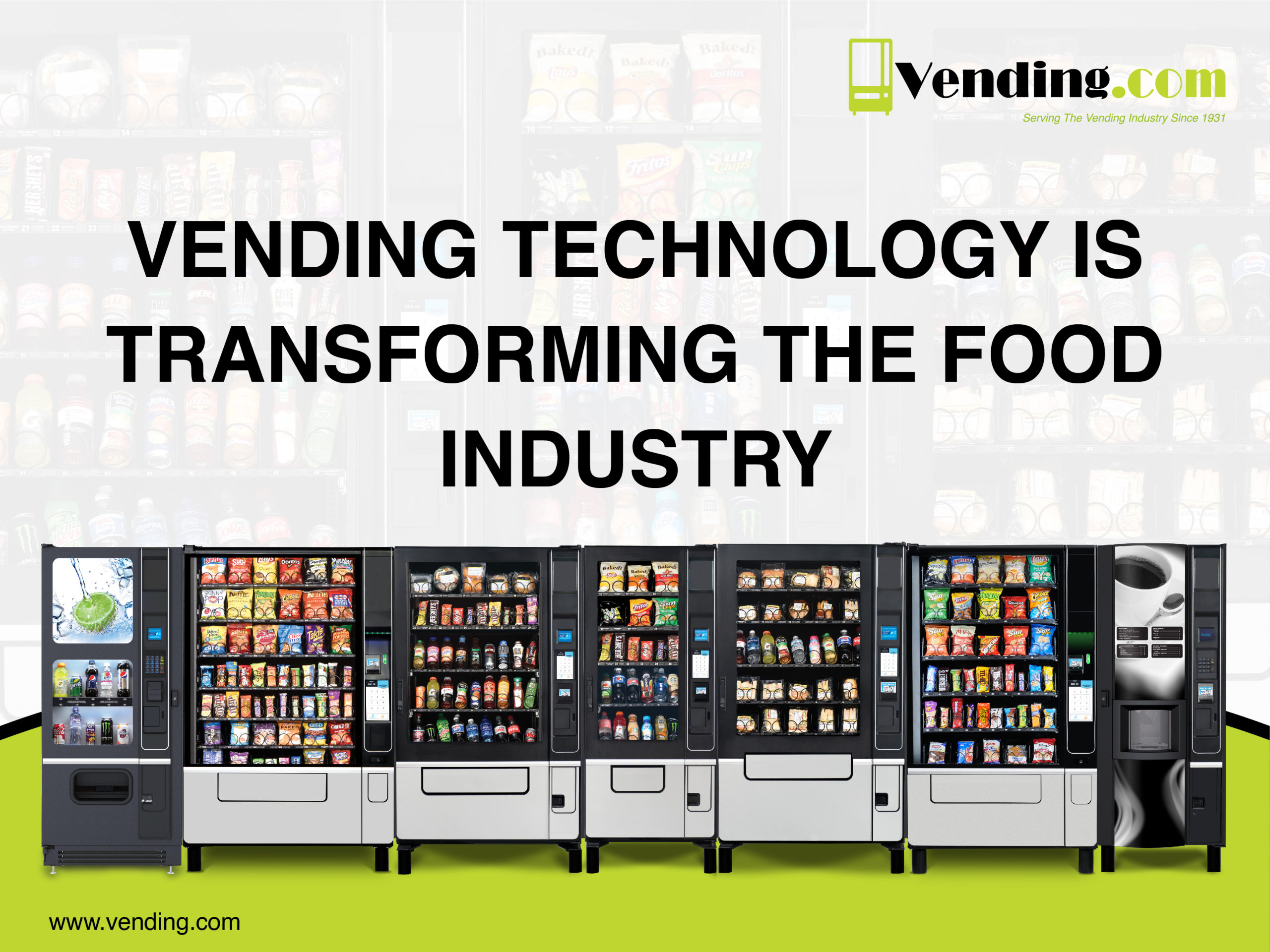
Vending.com - Vending technology is transforming the food industry

Vending Technology is Transforming Food Industry Trends

Introduction

Vending machines have been serving food products to consumers for more than a century. Today, more than $30 billion worth of food and beverages are bought from vending machines all over the country each year. They form an integral part of the food supply chain.

Like all electrical and electronic equipment, vending machines are embracing the growth of technology. Cloud computing, the Internet of Things, Electronic Payment Interfaces like Greenlite Vending, and Graphical Human-Machine Interfaces are some examples of the latest technology used in modern vending machines Such pieces of technology have created new possibilities in unmanned food retail. They have improved efficiencies, reduced waste, enhanced accountability and delivered novel experiences for the end-user. Let us explore how technology in vending is transforming the food industry and its trends.

Vending in the Food Industry

Thomas Adams installed machines selling sugar-coated chewing gum balls in New York in the late 19th century. Vending machines have since played a significant role in food industry trends. Today they sell everything from packaged potato chips to freshly cooked pizza. Disregarding a few fringe variants, the majority of food products that flow through the vending channel are of four broad types:

Snacks and Beverages – This is the largest contributor to the share of food products sold through vending machines in the United States. It includes cold beverages (23%), packaged snacks (15.5%), and candy & confectionery (18.3%). This amounts to about $17.6 billion in annual sales in the U.S. They are mostly convenience sales and impulse purchases.

Frozen Food & Cold Storage Products – This category is the second-largest by sales. It consists of ice cream (1.9%), frozen food (5.3%), and Healthy & Fresh Food (8.2%). Such products usually have a short shelf life. Hence the vending machines selling them are limited to specific areas like grocery stores, micro-markets or other sites where consumers come to buy food supplies. Together, they contribute to about $4.9 billion in annual sales in the U.S.

Hot Beverages – The hot beverage vending took a tremendous beating during the COVID-19 pandemic and the following lockdown measures of several state governments. But since 2021, the industry has been bouncing back hard. Today, hot beverage vending machines contribute to approximately 3.8% of total sales, equaling about $1.2 billion annually.

Others – All other categories have been grouped into this category. This includes fresh pizzas, hot food, soup, ready meat, and french fries. This segment contributes to $4.2 billion in annual sales in the U.S. Some reports claim that this is the fastest-growing of all categories of food sold through vending machines.

Benefits of Vending Technology for the Food Industry

There are several participants in the food industry. Some of them are a part of the food products’ value stream. They participate in the production, logistics and consumption of food. This includes the business that produces and packages food, catering or food services providers, wholesalers and retailers. When vending machines are involved in the process, there are more participants. They are vending machine operators, owners of locations where the vending machines are placed and sources of food products.

Economic Value Added for all Stakeholders: The sale of food products through vending machines creates revenue for vending machine operators and location owners. Considering that a massive part of the sales on vending machines are discretionary and impulse purchases, they increase the total sales volume in the food industry. This helps all the participants in this industry grow their revenue.

Vending in Food Security: It is estimated that about 3.1 million Americans suffer from acute food insecurity. A big part of it is because of food deserts. This is a crisis driven by the lack of accessibility to food where it is required. Vending machines can become satellite stores for store owners, which can be replenished regularly. This helps extend the range of service of the grocery or departmental stores without having to incur expensive capital. The latest vending machines have onboard or cloud-enabled inventory management software. This helps the store owners to track consumption and replace the stock in these remotely installed machines without having to visit them for frequent inspection. When all impediments are removed, store owners are motivated to install more vending machines that give access to processed and fresh food. This can help improve food security by providing convenient access to essential nutrition anywhere and anytime.

Vending for Sustainability: As discussed earlier, vending machines with inventory management help track food consumption. Owners can now stock the right amount of food in their machines by monitoring stock levels. This minimizes food waste.

Moreover, new-age machines use energy-efficient cooling systems like R290-based refrigeration units. They are easier to deploy than replacing large cooling units of big stores or markets. This makes vending machines an energy-efficient supplement to stores wherever possible.

Dealing with catastrophic disruptions: If there is anything that the COVID-19 pandemic has taught us in 2020 and 2021, we depend on a fragile supply chain for our daily needs. The world is still reeling from its after-effects. Vending machines can help address the last-mile supply chain issues by providing contactless access to essential food supplies. Some machines have inherent UV-based irradiation to sanitize machine interfaces and supplies.

Emerging Technology in Food Vending

Recent advances in electronics, software and computing have revolutionized the vending industry. The benefits of this technological progress have had a positive impact on the food industry and its trends. Some of them are discussed below.

Contamination Prevention: UV sanitization has helped vending machines not only sanitize the touchpoints where consumers interact with them. They now can sanitize the merchandise they sell. UVend Technology makes high-touch machine surfaces safer by destroying or inactivating some of the most common viruses, bacteria, and highly beneficial during COVID-19.

Hot Food Vending: Energy-efficient heating systems combined with precision robotics have helped turn vending machines into kitchens. This is expected to widen the range of products and services offered through vending machines.

Sustainability & Eco-Friendliness: Modern cooling systems, prevention of waste using inventory management platforms and other environmentally responsible features make vending machines a compelling retail channel in food industry trends.

Conclusion:

The food industry has been one of the earliest beneficiaries of vending machine technology. All stakeholders in the food industry benefit from the use of vending machines as a channel for last-mile retail. The recent developments in technology have only enhanced the benefits of vending machines.

Vending.com has been a part of the vending industry for over 90 years. Strong investments in research and development on cutting-edge technology have helped Vending.com set the pace for innovations in the vending industry. If you are looking to set up a vending business or grow your current vending business, talk to us at 1-855-929-1042 or visit our website.

Section 179 - Tax

Don’t miss out on year-end tax saving opportunities with the Section 179 tax deduction for your vending business

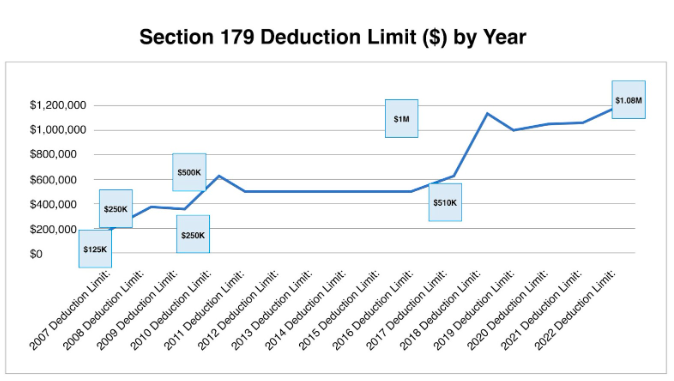
If you are wondering why all small businesses around you are rushing to make purchases, then you are in the right place. For those who have woken up from a 15-year slumber, Section 179 allows all businesses to deduct the total value of qualified purchases within certain limits while computing taxes. This has been around since 2008. This year the government provides several additional benefits to businesses, including the ability to deduct up to $1,080,000. This is the highest-ever deduction allowed so far. This number has varied each year and might not even be applicable in future years. For vending machine businesses interested in this Section 179 tax deduction in 2022, you have about six weeks to make eligible purchases.

Section 179
Section 179 Deduction Limit ($) by Year

Eligibility for Section 179 Deductions

Large businesses can enjoy the same deductions as small ones under Section 179. However, the deductions have been structured to specifically encourage small businesses and to boost their profitability. 

Certain governing conditions define eligibility for this deduction. The total qualified equipment purchase for these businesses should be at most $3.78 Million. The following list shows the type of equipment eligible for this deduction:

Equipment (machines, etc.) purchased for business use:

  • Tangible personal property used in business
  • Business vehicles with a gross vehicle weight above 6,000 lbs
  • Computers
  • Computer “Off-the-Shelf” software
  • Office furniture
  • Office equipment

Vending machines are included within eligible purchases for the Section 179 Tax Deduction. This allows small vending businesses to spend money on capital enhancement and enjoy tax savings.

Off-the-Shelf software purchases are also eligible to put toward this deduction. Bespoke or custom-developed software and software services are not eligible, however.

Another qualifier is that the equipment purchased in FY 22 must also have been implemented in FY 22. The business must also have made a taxable profit in the same year. If the business cuts a loss, it will only be eligible for bonus depreciation. [1]

Limits in Section 179 for FY 2022

The minimum spending on capital equipment or software for which the Section 179 deductions applies is $2,700,000. The maximum amount for which the deductions apply is $3,780,000. This means there can be a dollar-to-dollar deduction for a total of $1,080,000 ($3.78M – $2.7 M) in FY 22.

This limit makes it very attractive for small and medium businesses, as large businesses often spend more than $3.78 Mn on Section 179 qualified equipment in a year.

Section 179 and Financed Purchases

The relevance of Section 179 deductions for cash-down purchases in the current year is straightforward. However, the government allows businesses to deduct for financed purchases too. The point is that businesses are eligible to deduct the total value of the equipment bought, including what is financed in the current year. This can be explained by the following example:

Assume that the value of 10 Vending Machines = $ 100,000 **

The total value of installments in the current year as a part of the financing agreement = $ 20,000 **

The value eligible for Section 179 Deduction = $ 100,000 **

Tax Savings when the tax rate is 22% = $ 22,000 **

** All values are assumptions to demonstrate deductions in the case of a financed purchase.

Thus, there can be instances where the Section 179 deductions can save more in taxes than the money spent toward that purchase in the current year. This depends on the terms of financing, though.

Savings for your vending business can be estimated by clicking on the link at the end of this article.

Electing to Deduct Under Section 179

Vending machine business tax deductions under Section 179 are not applicable by default. All businesses must elect for this deduction in form 4562 while filing the returns at the end of the year. This is a form a business must file when showing depreciation of assets or deductions under Section 179. Businesses can claim this deduction even when filing under an approved extension beyond the date for filing returns.

Investments eligible for the computation of deductions include the amount spent up to the date of filing returns. Expenses not considered in the years preceding the current year can be included in the current year. However, the investments made before 2007 cannot be considered. [2]

Next Steps for Your Vending Business

If you have not already purchased enough equipment to enjoy the benefits of deductions under Section 179, now is the time. The deduction does not only help you improve your P&L, but it can also help you save taxes and invest in your growth.

If you do not have disposable cash that you can use to purchase vending machines, that should not be a hurdle. You can finance your purchase using our attractive financing options and still claim deductions for the total value of the purchase as long as it is within the eligible limit for the current year.

Our vending specialists can help you estimate your savings and plan the purchase of your new or used vending machines. To know more, call us at 1-855-929-1042 or visit our website at www.vending.com.

Useful Links:

Part 1 of Form 4562: https://www.irs.gov/pub/irs-pdf/f4562.pdf

Information about Section 179: https://www.section179.org/

Tax Deduction Calculator: https://www.section179.org/section_179_calculator/


[1] – https://www.section179.org/section_179_deduction/

[2] – https://www.section179.org/electing_section_179_deductions/

VC BLOG BANNER

How to Start a Vending Machine Business: A 10-Step Guide

Key Takeaways:

  • Launching a vending route typically involves market research, funding, equipment, licensing, and securing a location, in roughly that order.
  • Startup costs vary widely depending on whether you buy new or used equipment and how many machines you launch with.
  • Location is the single biggest factor in whether a machine succeeds, so it deserves as much attention as the equipment itself.
  • Modern technology like cashless payments and remote monitoring makes it easier than ever to manage a route part-time.
  • Long-term success comes from reinvesting early profits into additional machines and continuously refining your product mix.

How to start a vending machine business comes down to ten manageable steps. None of them are complicated on their own, but skipping one, especially location scouting or licensing, can slow down or sink an otherwise promising business. Here’s the complete roadmap, from your first market research call to scaling into a multi-machine route.

How Much Does It Cost to Start Your Own Vending Machine?

The honest answer is that it depends on your equipment choices. A single used machine with a starter inventory can run a few thousand dollars, while a new, tech-equipped unit with cashless payments can cost significantly more. Review our full startup cost breakdown to budget accurately before you buy.

How to Start a Vending Machine Business: 10 Steps

Step 1: Research Your Market and Audience: Identify who you want to serve and what they need. A gym crowd wants protein and hydration, while an office wants convenience and variety.

Step 2: Write a Simple Business Plan: Outline your target locations, startup budget, and revenue goals. This doesn’t need to be complex, but it will guide every decision that follows.

Step 3: Secure Funding: Determine how much capital you need and explore your options, including personal savings, a small business loan, or vending machine financing to reduce upfront costs.

Step 4: Choose and Purchase Your Vending Machines: Select equipment that matches your target locations and products. Prioritize cashless payment and remote monitoring capability from the start.

Step 5: Register Your Business and Obtain Licenses: Check state and local regulations for the permits you’ll need. Many operators also choose to form an LLC to protect their personal assets.

Step 6: Find and Secure High-Traffic Locations: Reach out to offices, schools, gyms, and other high-traffic locations, and negotiate a written agreement with the property owner or manager.

Step 7: Stock Your Machines Strategically: Match your product mix to your audience, balancing proven top-selling snacks with a few healthier options.

Step 8: Set Up Cashless Payments and Remote Monitoring: Most customers no longer carry cash, so a modern payment system isn’t optional. Remote inventory tracking also saves you unnecessary trips to check on machines that don’t need a refill.

Step 9: Promote Your Machines and Build Relationships: Let building tenants, students, or staff know your machine is there through simple signage or an introduction email and maintain a good relationship with the property owner.

Step 10: Track Performance and Reinvest to Scale: Review your sales data regularly, replace slow-moving products, and reinvest early profits into your next machine to grow your route over time.

Vending Machine Business Tips for Long-Term Success

Beyond the ten steps above, these vending machine business tips can help you avoid common pitfalls and build a more resilient route:

  • Prioritize dwell time over raw foot traffic: A smaller crowd that waits around often outsells a larger crowd that walks by quickly.
  • Always get a written contract: A verbal agreement with a property owner can end abruptly. A signed agreement protects your placement.
  • Rotate slow-moving products quickly: A slot filled with something nobody wants is lost revenue just like an empty one.
  • Don’t overextend early: Master one or two machines before scaling. A route that’s poorly maintained hurts your reputation with property owners.
  • Revisit your pricing periodically: Rising product and delivery costs mean your pricing strategy should be reviewed at least once or twice a year.

Ready to Launch Your Vending Machine Business?

Starting a vending machine business is one of the more accessible ways to build a new income stream, especially when you follow a clear, proven process. At Vending.com, we provide the equipment, financing options, and expert support to help you launch with confidence.

Ready to get started? Contact our team or call us at 1-855-965-0931 today!

VC BLOG BANNER VC Blog Banner

How to Increase Vending Machine Sales: Tips to Maximize Your Sales

Did you know that side hustles have become increasingly popular in the United States? According to a recent Zapier and The Harris Poll survey, 34% of Americans have a side hustle.  

Interestingly, many of these side hustles are relatively new. 67% of those with a side hustle started within the past three years, and 31% began in 2020. This surge in side hustles indicates the growing interest in exploring additional income streams. Vending machines have immense potential to be a successful side hustle and are becoming more popular.

In this blog, we’ll share powerful tips to help you increase and boost your vending machine sales and turn them into a lucrative source of passive income. If you already have a vending machine and want to increase sales or are looking to start your new business, either way, this blog will be insightful. 


Unlock Your Second Stream of Passive Income with Vending Machines 

Discover the untapped potential of vending machines and transform them into a lucrative second source of passive income. If you can strategically place the vending machines in high-traffic locations, you can increase your vending machine sales and generate consistent revenue without constant supervision.


Many entrepreneurs usually have up to three different sources of passive income, and many of those people are already harnessing the power of vending machines, reaping the rewards of this low-maintenance yet highly profitable business model. 

Do you need help with how to increase your vending machine sales? Look no further! This blog will reveal proven tips to supercharge your vending machine sales, from selecting the perfect products to leveraging cutting-edge technology and strategic locations. 

Let’s dive in and discover how to increase your vending machine sales like never before!


Tips to Increase Sales from Your Vending Machines 

Let’s now discuss possible ways to increase vending machine sales. Here are seven tips we have for you. 

Tip 1: Choose the Right Products: The right products are vital to vending success. Analyze your target audience, location, and trends to stock up on irresistible items that leave your customers returning for more. This is a crucial sales strategy for boosting customer satisfaction and repeat business.

Tip 2: Optimize Your Pricing: Finding the sweet spot for pricing can significantly impact sales. Experiment with pricing strategies, like bundling, tiered pricing, or discounts, to entice customers without compromising your profit margins. 

Tip 3: Embrace Technology: Stay ahead by integrating cashless payment systems, interactive displays, and real-time inventory tracking. Modernizing your machines enhances the customer experience and fosters loyalty. 

Tip 4: Location, Location, Location: Strategic placement can make or break your vending success. Identify high-traffic areas, like office complexes, schools, or gyms, and negotiate prime spots to maximize sales potential. 

Tip 5: Upkeep for Success: Maintain your vending machines regularly to ensure they’re always in top-notch condition. Clean, functional, and well-stocked machines instill customer confidence and drive repeat sales. 

Tip 6: Analyze Customer Preferences: Regularly analyze customer feedback and purchase patterns to identify popular items and adjust your product offerings accordingly. By catering to customer preferences, you enhance their satisfaction and boost sales. 

Tip 7: Implement Eye-Catching Signage: Utilize vibrant and attractive signage on your vending machines to catch future customers’ attention. Transparent product displays and enticing visuals can motivate customers to make impulsive purchases, boosting overall sales. Another way is by designing a custom wrap for your vending machine. At Vending.com, we can help you design a custom vending machine graphic or wrap that is meaningful to your business and location to attract more customers and increase sales!

With these strategic tips on how to increase your vending machine sales, you’ll be well on your way to boosting sales from your vending machines and maximizing the potential of this lucrative business venture. Start implementing these practices today to unlock the full earning potential of your vending business! 

Exploit the power of Vending Machines

With the insights shared in this article, you now hold the key to unlocking the potential of vending machines as an intelligent investment for achieving financial freedom. Embrace this opportunity to bid farewell to financial worries and embark on a rewarding journey toward securing your future with the power of vending machines!  

Seize the chance to tap into a passive income stream that can make a difference in your life. Start your vending machine venture today and pave the way for a prosperous tomorrow! 

Visit Vending.com now and explore our top-notch affordable vending machine solutions to elevate your business to new heights! Remember, success is just a click away! 

VC BLOG BANNER 02 (1)

Cashless Vending – Transforming Retail Experiences

In today’s fast-paced business world, convenience is the name of the game. And when it comes to shopping, cashless payment trends in vending tech have revolutionized the way we buy things. It is no wonder consumers are flocking to this cutting-edge trend, which offers unparalleled ease and efficiency. 

Retailers need to keep up with the times if they want to compete in this ever-changing landscape. As technology propels us toward a seamless, digital future, retailers who fail to adapt risk falling behind. In this article, we take a closer look at the world of cashless payment trends in vending tech and the innovative solutions that keep up with modern shoppers’ demands, transforming the retail industry as we know it.

Vending Machine Evolution

Vending Machines have evolved into sophisticated, multi-purpose devices capable of selling a wide array of products, saving lives (you read that right), and helping us lead healthier lives. Such an achievement of engineering and innovation has been facilitated by significant advancements in technology, enabling the development of increasingly innovative and user-friendly vending solutions.


A critical aspect of this evolution has been the diversification of payment methods. In the beginning, vending machines relied solely on coins as a means of payment. However, as technology progressed and the world increasingly digitized, alternative payment options such as bills, credit cards, and even mobile wallets emerged.These cashless payment trends in vending tech and other new payment methods expanded the range of product offerings in vending machines and made it more convenient for consumers to make purchases on the go.

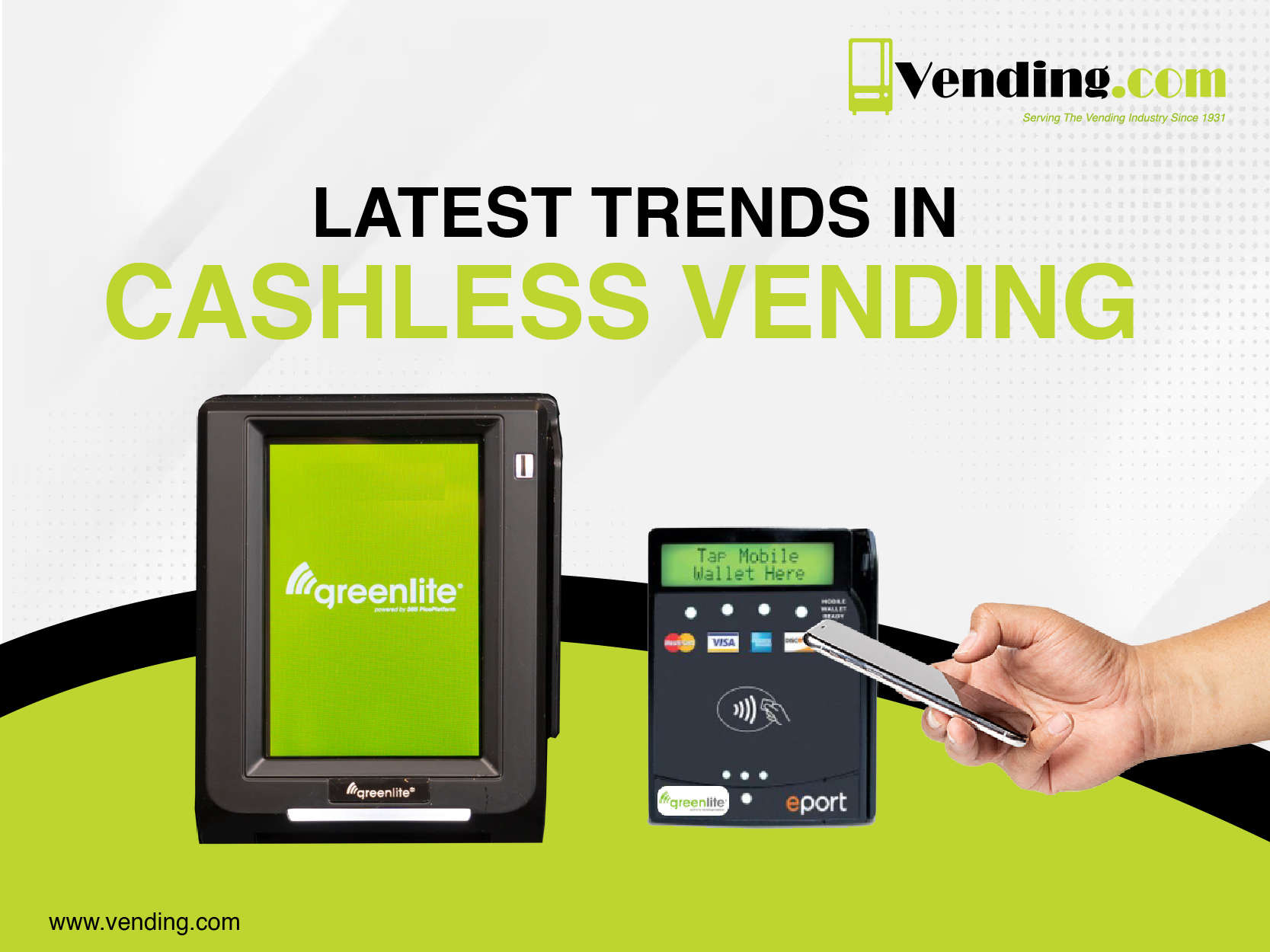
Today, cashless vending machines continue to evolve, incorporating cutting-edge technologies such as Greenlite Cashless, an AI-powered cashless payment system for vending machines. The system uses machine learning algorithms to identify and process credit and debit card transactions, as well as to predict demand for products and improve the user experience. This makes Greenlite Cashless a more secure, efficient, and effective cashless payment system for vending operators.

As we witness the remarkable transformation of this once-simple retail solution, it’s crucial to examine the latest trends and innovations driving the cashless payment trends in vending tech and their revolutionary impact on the retail landscape.

How Will Businesses and Consumers Benefit? 

In today’s world, where cashless transactions have become the norm, one might think that the answer to ‘How will businesses and consumers benefit?’ is simple. However, due to continuous technological innovations, the answer to this question goes much deeper than expected. 

Cashless payment trends in vending tech is becoming an increasingly popular option for retailers looking to improve the customer experience. This type of payment offers numerous advantages for both businesses and consumers. One of the most significant benefits for businesses is the potential for increased sales and revenue. By accepting a wider range of payment methods, cashless vending machines make it more convenient for customers to make purchases, encouraging impulse buys and ensuring that customers always have a way to pay for their items. Furthermore, cashless vending machines often allow retailers to offer higher-priced items, expanding their product offerings and boosting their profit margins.

Vending machines that accept cashless payments are a game-changer in streamlining operations and saving precious time and resources. They eliminate the need for regular cash collection, counting, and depositing, freeing staff to focus on other essential tasks. This, in turn, reduces transportation costs and operational expenses that would otherwise be spent on hiring someone to complete these mundane tasks. Additionally, cashless vending machines are more secure and less susceptible to theft and vandalism, providing retailers with added assurance and peace of mind.

From a consumer standpoint, cashless payment trends in vending tech offer unparalleled convenience. With the ability to accept a wide array of payment methods, including credit cards, mobile wallets, and contactless payments, cashless vending machines cater to the diverse needs of today’s tech-savvy consumers. In an increasingly cashless society, this convenience is appreciated and often expected by customers, making it essential for retailers to stay ahead of the curve by embracing these cutting-edge vending solutions. Greenlite is designed to meet and exceed the expectations of the modern-day consumer with its user-free interface and multiple payment options. Customers can pay for items through the 365Pay app, Apple Pay/Google Pay, and a contactless card reader with the Greenlite Pico, providing customers with an easy, safe, and efficient purchasing experience. 

Greenlite – Creating a New Wave of Customer & Operator Experience

Greenlite Cashless is a solution that enables acceptance of card and mobile payments while providing cost-saving telemetry data management tools. It allows easy access to cashless and cash machine information, and operators can accept debit/credit cards and mobile payments. Its design increases sales and reduces costs for vending machine operators by offering different payment options. Additionally, remote monitoring, downloadable sales reports, and a suite of management tools help operators make informed business decisions for their machines. 

Greenlite is a technology revolutionizing retail and redefining customer and vending machine operator experience. Here’s how:


  • 24×7 Management: Greenlite Cashless has made vending machine management much more efficient. With the web-based management application, they can now have greater control and visibility. They can manage and keep track of their vending machines from home on any internet browser, including tablets, computers, and smartphones, 24/7. This helps operators quickly identify and resolve issues, ensuring the machines run smoothly. In addition, real-time monitoring also provides operators with enhanced security by immediately alerting operators of any detected or suspicious activity, which can help to reduce the risk of theft and break-ins.  
  • Track Your Sales: Greenlite facilitates sales data analysis based on a given period, such as daily, weekly, monthly, and yearly. It makes it easy for operators to analyze vending machine sales using comprehensive details on sales history by records based on specific periods. Operators can utilize these reports to help make more informed decisions about product inventory, pricing, and restocking. With these reports, operators can ensure their machines are always stocked with in-demand products that can maximize their revenue. 
  • Integrated Cash & Cashless Reporting: Greenlite offers a single platform to track and manage cash and cashless vending. Reporting gives operators visibility and control over both cash and cashless payments. This helps operators make smarter business decisions to maximize revenue by leveraging their cashless management solution to streamline cash accountability and optimize reporting.
  • Secure Interface: All payment transactions of Greenlite Cashless meet the current payment card industry-standard compliance requirements. The system offers security features such as encryption and tokenization to protect customer information. No card data gets stored, and you can give your customers the confidence of a safe purchase. Greenlite Cashless provides operators and customers peace of mind with secure payment processing. 
  • Artificial Intelligence (AI): The AI-powered features of Greenlite Cashless make it a secure, efficient, and effective cashless payment system for vending operators. The system uses machine learning algorithms to detect fraudulent transactions, which protects against fraud and theft. Additionally, it offers real-time data on sales, inventory, and machine performance, enabling vending operators to track business performance and make informed decisions about operations.
  • Visual Alerts: Every time operators log in, they receive real-time alerts and machine-level monitoring to track connectivity, sales, and performance, helping operators stay proactive with real-time machine health alerts. These alerts can help decrease a machine’s downtime and quickly solve issues to satisfy customers and prevent unnecessary sales loss.


The Future of Cashless Vending and Retail

As technology advances and the world becomes increasingly interconnected, the future of cashless payment trends in vending tech and retail looks incredibly promising. In the coming years, we can expect further advancements in cashless payment technology. As consumer expectations evolve, retailers must constantly adapt and innovate their vending strategies to stay ahead.

The continuous convergence of technology, consumer behavior, and industry innovation shapes the future of cashless payment trends in vending tech and retail. For operators who want to stay ahead, increase sales, and enhance customer experience, Greenlite Cashless is a valuable tool. If you want to stay ahead of the competition, Vending.com is the trusted choice. Vending.com has always been at the forefront of introducing new technology, including Greenlite Cashless, to vending equipment. To learn more, visit our website.

Decoding the Future: Key Trends Shaping the Vending Machine Industry in 2024

In recent years, the vending machine industry has undergone a remarkable transformation. Thanks to technology, this industry has transcended its conventional boundaries. The shift to cashless payments has led countless institutions to install vending machines. This change, driven by innovative trends and new technologies, enables greater convenience and introduces use cases that were not possible a decade ago.

Predicting the Future: Vending Machine Industry in 2024

By 2024, vending machines are expected to be more integrated into our daily lives, offering products, services, and experiences. Statistics suggest that the revenue for vending machine operators across the US will soon reach 7.4  million US dollars.

Here’s an overview of what we can expect going forward:

Digitalization and Smart Vending Machines

The digitalization of the vending machine industry represents convenience and vast capabilities. This transition goes beyond accepting digital payments – transforming vending machines into smart, connected devices. These devices will have the option to come with digital touch screens, internet connectivity, and cutting-edge sophistication, offering a more personalized and interactive experience. Moreover, they can be fine-tuned to recognize customers, remember their unique snack and drink preferences, and even suggest recommendations based on a track record of purchases.

Digitalization also enables remote monitoring and management of vending machines. Operators can track sales, inventory, and machine performance in real-time, allowing for more efficient operations and improved customer service.

90 Years of Creating Memorable Vending Experiences

Sustainability and Eco-friendly Trends

In the age of environmental awareness, sustainability has become a buzzword in the vending machine industry. Vending.com has vending equipment that operators can incentivize recycling by offering discounts or rewards to customers who return their used containers. Eco-friendly vending machines offer organic snacks and reusable water bottles, catering to consumers dedicated to reducing their environmental impact.

Some examples of sustainable vending machines include:

  1. Energy-efficient machines that come with energy-saving modes to reduce environmental impact and energy costs.
  2. Vending machines stocked with sustainably sourced products to reduce waste.
  3. Efficient machine inventory management systems can reduce the frequency of machine refills, thereby lowering fuel emissions. The machines are restocked based on product usage and inventory turnover, ensuring they are always well-stocked and ready for use. This helps prevent unnecessary visits to restock the machines and reduces the overall carbon footprint.

Health-conscious Trends: Healthy Vending Machines

Alongside sustainability, health consciousness is another societal 2024 drink and snack trend trend influencing the vending machine industry. As consumers’ habits gear more toward healthy eating, there is more demand for vending machines built to focus on health. Vending machines are now more likely to provide and stock healthy options, such as fresh fruit, salads, and protein bars.

Besides offering healthier alternatives, these machines provide nutritional information for their products, helping consumers make informed choices. Customers can now make informed decisions with a detailed list of ingredients, calorie counts, allergen information, and even product expiry. Such a level of transparency not only helps customers make good choices but creates a system of trust and reliability.

Healthy vending machines are becoming more popular as healthier snacks and drinks demand rises in 2024 trends. If you want to provide customers with nutritious options that exceed their expectations, Vending.com provides customizable vending equipment with a wide range of nutritional choices. See here for more details on providing a healthier vending experience.

The Impact of AI on the Vending Machine Industry

Artificial Intelligence (AI) is a technology that will remain a significant player in the vending industry.

AI can be a powerful tool for analyzing customer behavior and preferences, allowing vending machines to provide personalized recommendations. The technology also enables predictive maintenance, where potential issues are identified and addressed before they result in machine downtime. AI’s capabilities don’t stop there, as they open doors to exquisite features such as remote monitoring, facial recognition, interactive sensors, and more!

Innovation, Personified 

The Rise of Cashless Payment Systems

The rise of digital wallets and contactless payment methods has propelled cashless technology as one of the golden standards of convenience. Consumers today increasingly prefer to make purchases without cash. Vending machines adapt to this trend by incorporating card readers and QR code scanners, enabling payments via debit or credit cards and mobile wallets. These systems offer more convenience for consumers and help operators by reducing the risks and costs of handling cash.

Cashless payment systems like Greenlite can help operators increase profitability by unlocking their potential. The future of vending is cashless, and Cantaloupe’s 2023 Micropayment Trends Report states that 67% of all vending machine purchases in 2022 were made using cashless payment options. On top of that, consumers tend to spend 55% more money when they pay cashless. In other words, if you don’t have card readers on your vending machines, you’re missing out on significant sales.

As we stride into the future of vending, it’s clear that cashless transactions are the key to unlocking unprecedented success. Position your business for a profitable 2024 by embracing the cashless revolution with Greenlite Cashless Devices.

Conclusion: Future Prospects of the Vending Machine Industry

The vending machine industry is driven by technological advancements and changing consumer preferences, which are excitingly shaping the industry. Within the next year, vending machines are expected to be smarter, more connected, more sustainable, and more health conscious. These developments are expected to integrate vending machines into our daily lives and help offer products and services that contribute to broader societal goals.

At Vending.com, we take pride in our innovative approach and staying ahead of the competition by incorporating new trends and technology into our vending equipment and service. We are committed to supporting our customers throughout the entire process- from selecting the perfect machine and financing your purchase to maintaining your equipment and finding the best location for your vending machine. Let us be your partner in achieving financial success in 2024. Explore our wide range of equipment and apply for financing today to get approved in no time!

Top Beginner Mistakes to Avoid in the Vending Business blog

Top Beginner Mistakes to Avoid in the Vending Business

Starting a vending business offers great potential for passive income, but many beginners stumble early on. From poor location choices to neglecting machine upkeep, small mistakes can lead to big losses. In this blog, we’ll highlight the most common beginner pitfalls—and how to avoid them—for a smoother, more profitable start.